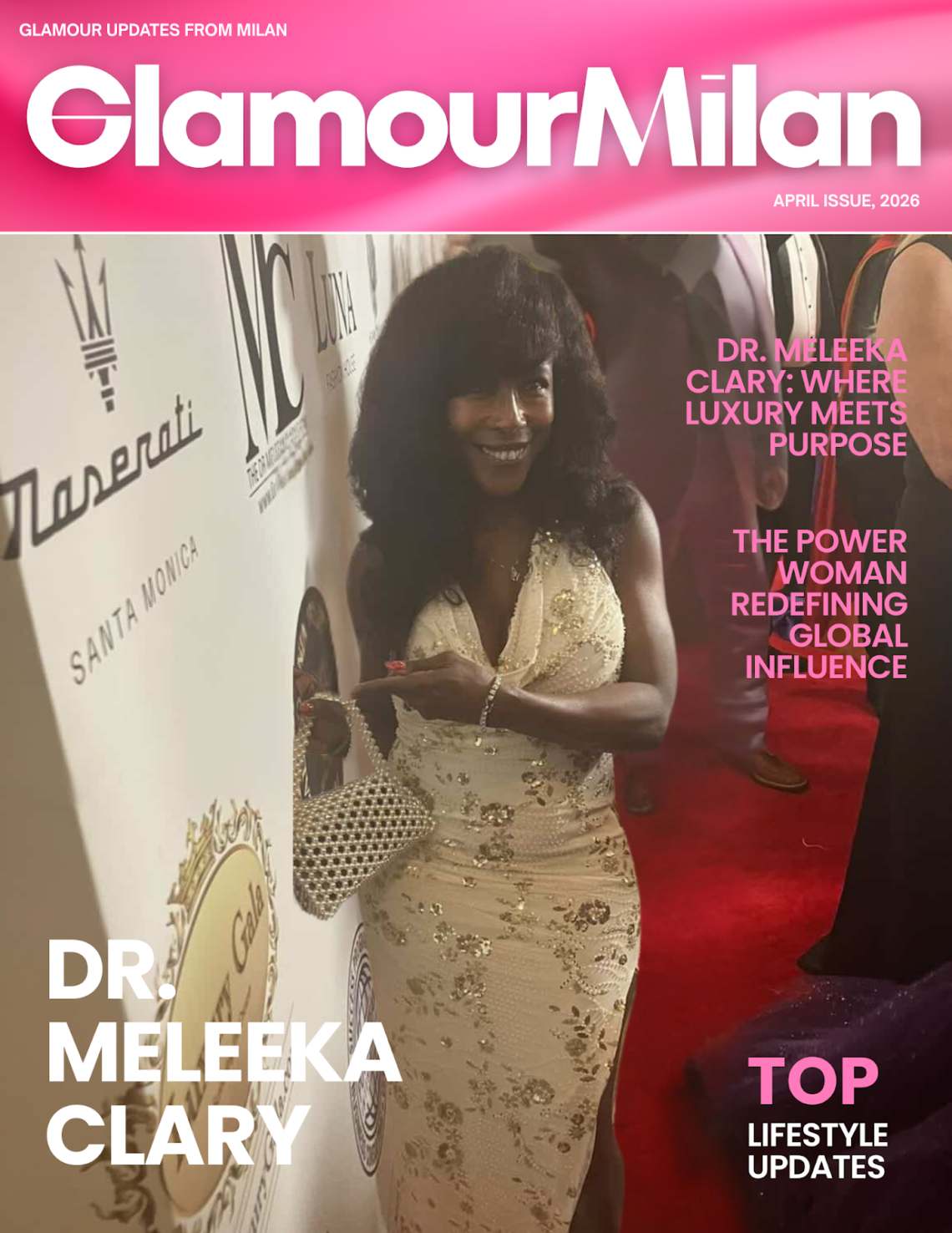
On the evening of March 15, within the refined brilliance of a luxury gala defined by influence, elegance, and global presence, Dr. Meleeka Clary stood in a moment that, to the outside world, represented culmination. Recognition. Arrival.
Yet the truth of that evening was far more complex.
The Human Rights Global Award placed in her hands symbolized decades of work that has rarely existed in rooms like this—work rooted not in spectacle, but in silence. In listening. In witnessing individuals navigating trauma, domestic violence, systemic imbalance, and the quiet endurance required to rebuild a life that has been fractured. For many, these are invisible battles. For Dr. Clary, they have been the foundation of her life’s work since the mid-1980s.
But awards, no matter how prestigious, rarely capture the full dimension of what they represent.
Because what stood on that stage that evening was not simply a professional being honored—it was a lifetime of accumulated resilience, shaped not only through service, but through lived contradiction.
Long before the presence of cameras, before red carpets and global streaming platforms, Dr. Clary’s career was defined by proximity to human vulnerability. As a clinical psychologist, her role was not to fix, but to understand—to create space where individuals could exist without interruption, without judgment, and without the pressure to simplify their experiences into something more palatable.
Over time, one truth became increasingly clear: healing requires visibility.
Not exposure in the traditional sense, but acknowledgment. Language. The ability for a story to exist outside the confines of private suffering.
It was this realization that guided her evolution beyond clinical practice.
Where many professionals remain within institutional frameworks, Dr. Clary chose expansion. Not as departure, but as amplification. She recognized that culture—media, storytelling, and entertainment—holds a power that policy alone cannot replicate. It reaches people where they are. It softens resistance. It invites reflection without demanding it.
This understanding led her into the world of acting, filmmaking, and production, where she began translating lived realities into narratives designed not for performance, but for connection.
Her academic foundation only strengthened this transition. With four law degrees accompanying her PhD in clinical psychology, she operates with a rare multidimensional lens—one that understands both the structural mechanics of power and the deeply personal nature of human experience. Law informs her awareness of rights and protection; psychology grounds her in empathy and complexity.
Together, they shape a voice that is both analytical and profoundly human.
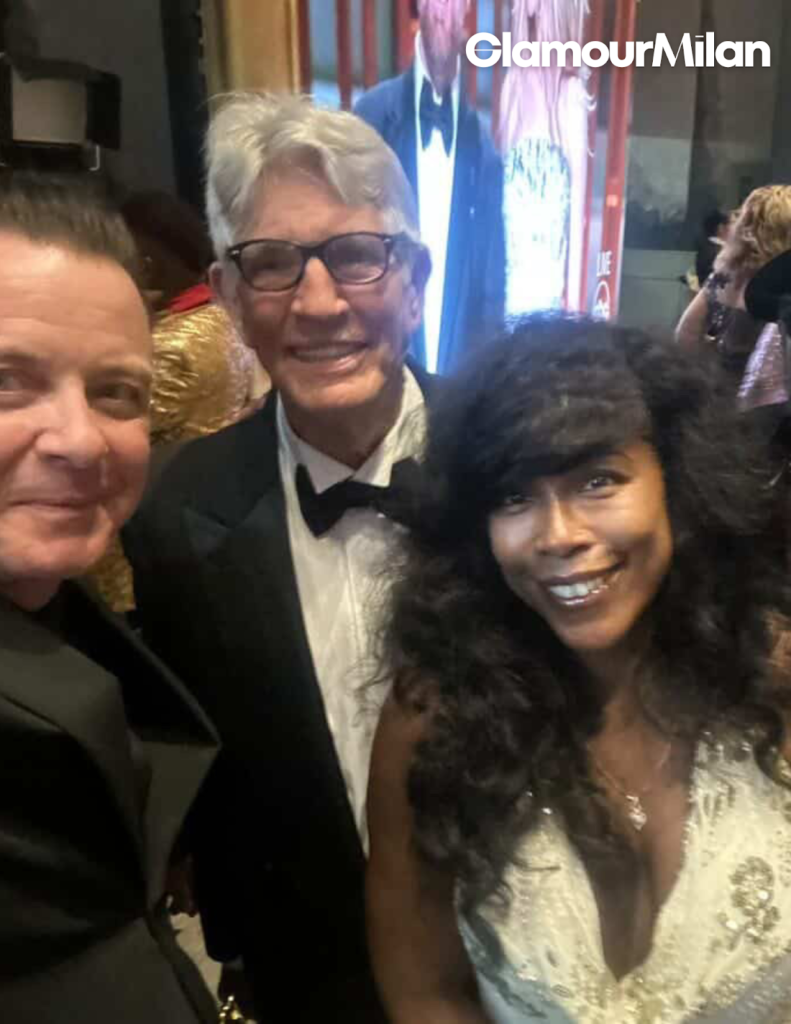
Douglas, Eric, and Meleeka
At the center of her current work is The Dr. Meleeka Clary Show, now reaching audiences globally through platforms such as Fire TV and Roku TV. The show does not follow the formula of modern media, which often prioritizes speed, sensationalism, and simplified narratives. Instead, it resists that structure entirely.
It creates space.
Guests are not brought on to perform resilience, nor to present neatly packaged transformations. They are invited to speak honestly—about survival, identity, injustice, rebuilding, and the nonlinear reality of healing. The conversations are not curated for comfort. They are shaped for truth.
And in an era saturated with noise, that distinction matters.
The expansion of the show onto global streaming platforms marks more than growth—it represents accessibility. Stories that once remained confined to private spaces are now reaching audiences across continents, cultures, and communities. It is advocacy not through instruction, but through presence.
And yet, even within this moment of professional elevation, March 15 carried a weight that no audience could see.
Because on that same day—within the same hours that recognition was being received—Dr. Clary was met with a loss that would forever redefine the memory of that evening: the passing of her oldest sibling.
There are moments in life where timelines collide in ways that feel almost impossible to process. Where celebration and grief occupy the same space, without resolution, without separation.
This was one of those moments.
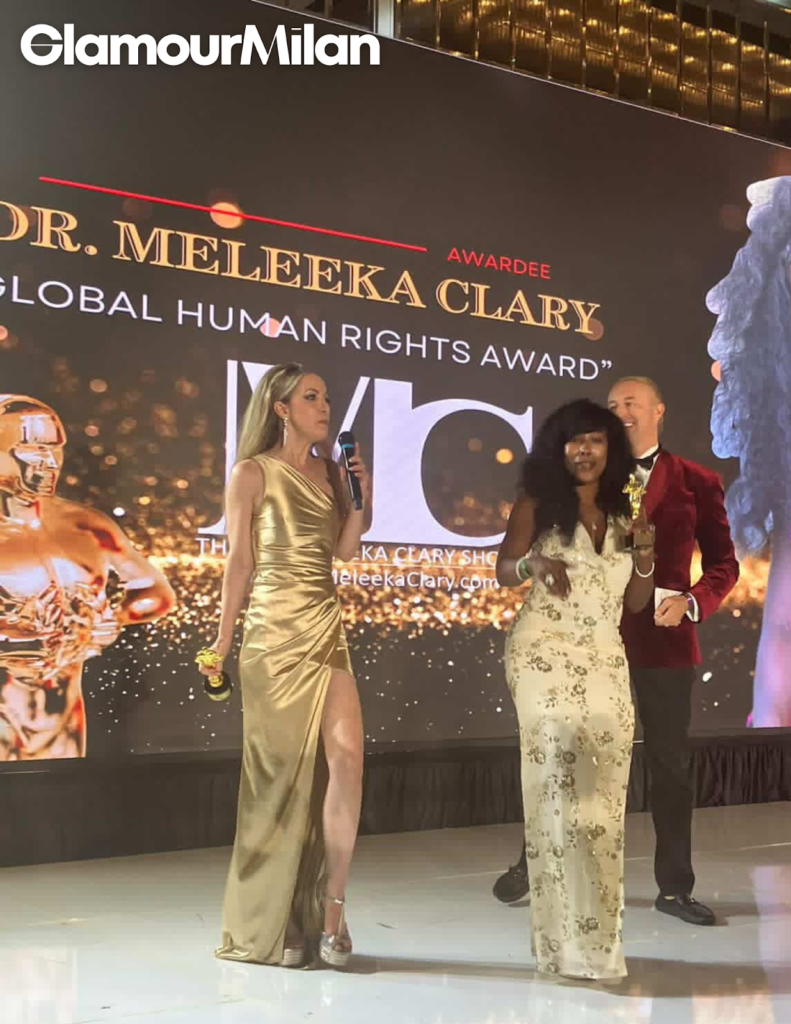
To stand in a room filled with light, acknowledgment, and applause while holding the knowledge of personal loss is a reality few can articulate. It is not something that can be compartmentalized or postponed. It exists fully, immediately, and without negotiation.
And yet, in many ways, this moment reflects the very essence of Dr. Clary’s life’s work.
Because resilience, as she has long understood, is not defined by ease. It is not a clean narrative. It does not arrive at convenient times, nor does it ask permission. It exists in contradiction—in the ability to hold both gratitude and grief, strength and vulnerability, public recognition and private heartbreak.
Her sister’s presence, though no longer physical, becomes inseparable from this moment. Not as an absence, but as a continuation—woven into the story, into the achievement, into the meaning behind it.
In this way, the award transforms.
It is no longer solely a symbol of professional recognition. It becomes something deeper—something personal. A marker not only of what has been accomplished, but of what has been endured.
The evening itself, rich with connection and presence, also reflected the broader landscape of influence in which Dr. Clary now moves. Among those she encountered was Snoop Dogg’s father—a figure whose life speaks to service, resilience, and history, including his distinction as a three-purple-heart veteran.
Such moments are not merely social. They are intersections of lived experience—different paths shaped by endurance, meeting within a shared space of recognition.
But even within these interactions, the defining thread remains consistent: authenticity.
Dr. Clary’s presence in these environments is not performative. It is grounded. Intentional. She does not enter spaces to adopt them—she enters them to expand them. To bring into them the same values that have defined her work from the beginning: listening, dignity, and the refusal to reduce human experience into something easily consumed.
Faith continues to serve as a quiet foundation beneath all of this. Not as something imposed or declared, but as something lived. It is the constant that remains when circumstances shift—when success arrives, when loss intervenes, and when the path forward becomes unclear.
For Dr. Clary, purpose has never been separate from accountability. It extends to her children, to her audience, and to every individual whose story becomes part of her platform. It is a responsibility she carries with precision and care.
Because visibility, when not handled with integrity, can distort.
And her work has never been about distortion.
Recognition will continue. Platforms will grow. Opportunities will expand.
But what defines Dr. Meleeka Clary is not the scale of her reach—it is the consistency of her intention.
To show up.
To listen.
To create space where stories are not interrupted, not reshaped, not diminished.
And to stand—fully present—even in moments where life asks her to carry both light and loss at the same time.
That is not performance.
That is not narrative.
That is legacy—still unfolding, still evolving, and still rooted in something far deeper than recognition alone.