
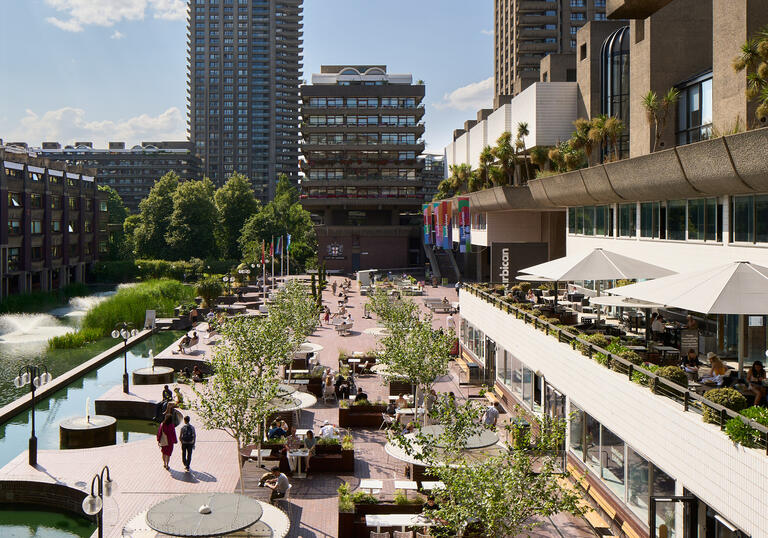
Londoners and architecture lovers around the world now have cause for excitement: the Barbican Centre, one of the UK’s most celebrated Brutalist-era cultural landmarks, is about to undergo a sweeping transformation. The ambitious renovation, officially known as the Barbican Renewal, is a vital effort to restore, modernize, and future-proof the 1970s complex while preserving its bold architectural identity.
The first phase of the makeover focuses on revitalizing the Centre’s most iconic public spaces: the foyers, the lakeside terrace, and the vast glasshouse conservatory, the largest of its kind in central London. Inside, the famous concrete-columned foyers will be cleaned up and reimagined as more flexible, inclusive areas — spaces that welcome everyone and make room for creative use rather than simply functioning as corridors for theatre-goers. Meanwhile, the lakeside terrace will be refreshed with repaired paving, upgraded lighting, enhanced landscaping, and improved public-space amenities, seeking to restore the lakeside’s calm, communal character.
Perhaps the most transformative change will hit the conservatory — a tangle of walkways, tropical planting, and glass that had grown increasingly dated. The plan is to rework the conservatory with improved accessibility, refreshed planting schemes, better climate control, and more welcoming paths that make the space easier to navigate and enjoy.
Beyond purely aesthetic upgrades, the Renewal effort tackles long-standing structural and usability issues. Over decades, the building’s systems and materials have worn down — concrete has weathered, utilities have aged, and some spaces have fallen into disuse. The renewal will upgrade building systems, improve environmental performance, and repurpose underused areas into creative or civic spaces, helping the Centre meet modern sustainability and accessibility standards.
The project is not a quick fix. Full planning approval is expected soon, with construction anticipated to begin in 2027. The first phase — those key public-facing areas — is slated for completion by 2030, in time for the Centre’s 50th anniversary.
For many, the makeover is a balancing act: preserving the striking brutalist architecture that makes the Barbican unique, while adapting it to the needs of a modern, diverse public. The aim is not to erase history but to honor and reawaken it for future generations.
In short, the Barbican Centre is stepping into a new chapter. As upkeep and public expectations evolve, the Renewal offers a chance to keep this architectural and cultural jewel alive, vibrant, and relevant. For those who have long admired the Centre’s rugged concrete grandeur, the changes may feel bold, but with sensitive design, inclusive spaces, and renewed vitality, the Barbican could emerge not just preserved, but transformed — ready to continue inspiring performances, art, community, and creativity for decades to come.

